

News Details
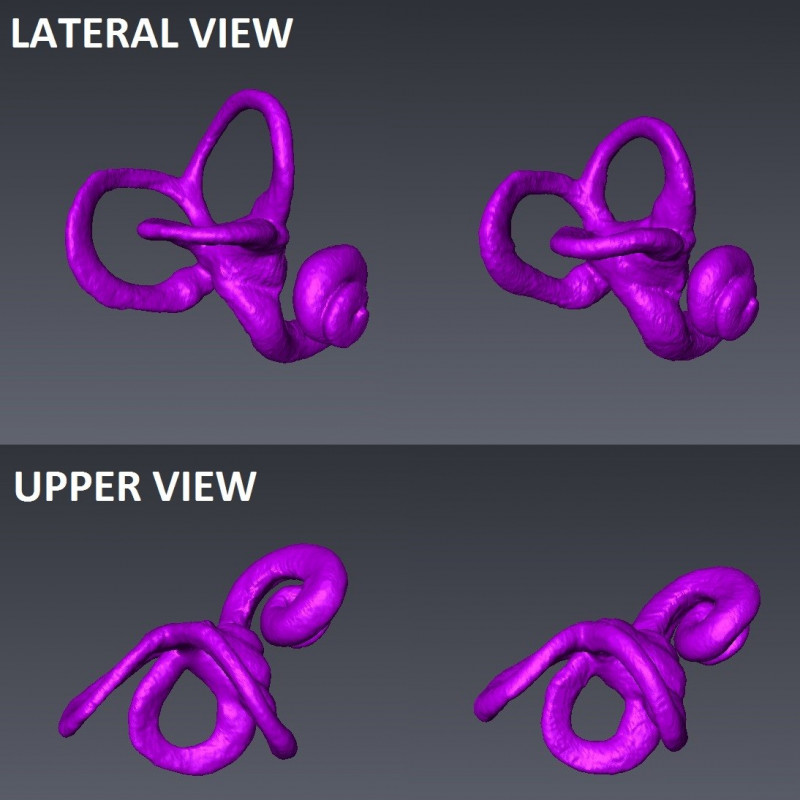
In a recent paper published in PloS One, KLI senior postdoc fellow Anne Le Maître and KLI alumna Lumila Menéndez argue for more sustainable and ethical practices for the study of anthropological collections. Using human archaeological samples from Argentina, they demonstrate that micro-computed tomography—a digital tool widely used for the study of internal bone structures—does not affect the preservation of ancient DNA (aDNA) in the petrous portion of the skull, where it is usually sampled. They propose a new workflow to maximize the scientific information obtained from osteological samples, while minimizing destructive practices. In particular, this workflow includes the collection of any relevant information about bone context and preservation, the biological profile of the individual, as well as digital preservation using 3D imaging techniques. They also argue that any destructive sampling must be limited to a minute part of the bone and preceded by pre-screening techniques. With this workflow, the authors hope to promote more ethical practices in anthropological research.
Publication:
Menéndez LP, Luisi P, López-Sosa MC, Da Silva SM, Buck LT, Kuzminsky SC, et al. (2026) µCT scanning effects on aDNA and a multi-step workflow for archaeological petrous portions. PLoS One 21(4): e0334682. https://doi.org/10.1371/journal.pone.0334682