

KLI Colloquia are invited research talks of about an hour followed by 30 min discussion. The talks are held in English, open to the public, and offered in hybrid format.
Join via Zoom:
https://us02web.zoom.us/j/5881861923?omn=85945744831
Meeting ID: 588 186 1923
Fall-Winter 2026/27 KLI Colloquium Series
1 October 2026 (Thurs) 3-4:30 PM CET
Scientific Integration as Fit: The Developmental Biases of Interdisciplinarity
Olesya BONDARENKO (KLI)
8 October 2026 (Thurs) 3-4:30 PM CET
The Role of Conversational Cues in the Co-Evolution of Language and Cooperation
Theresa MATZINGER (University of Vienna)
5 November 2026 (Thurs) 3-4:30 PM CET
Kin Matters: An Intervention in the Fragile Sciences
Robert A. WILSON (University of Western Australia)
19 November 2026 (Thurs) 3-4:30 PM CET
Modeling the Evolution of Human Early Embryogenesis with Stem Cells
Nicolas RIVRON (Institute of Molecular Biotechnology/IMBA, Vienna)
3 December 2026 (Thurs) 3-4:30 PM CET
Peter TURCHIN (Complexity Science Hub, Vienna)
10 December 2026 (Thurs) 3-4:30 PM CET
On the Cultural Macroevolution of Intentional Cranial Modifications
Marcelo SÁNCHEZ-VILLAGRA (University of Zurich)
14 January 2027 (Thurs) 3-4:30 PM CET
DNA from Archaeological Sediments as a Tracer for Past Societies
Benjamin VERNOT (University of Vienna)
28 January 2027 (Thurs) 3-4:30 PM CET
Beyond Fear: How the Amygdala Links Interoception and Exteroception
Ronald SLADKY (University of Vienna)
KLI Colloquia 2014 – 2026
Event Details
Topic description:
The explanatory framework of cultural evolutionary theory (CET) relies on a cultural analog to the genotype-phenotype distinction, with socially transmitted information (i.e., ideational units) serving as cultural genotypes and the observable cultural manifestations they produce, such as behaviors, artifacts, and institutions, serving as cultural phenotypes. As for now, CET has mostly been concerned with the homocatalytic role of ideational units, i.e., how local episodes of social learning maintain cultural lineages at the level of the population. However, ideational units’ heterocatalytic role, i.e., how socially acquired information produces the cultural phenotypes they are associated with, has received scant if any attention. This is surprising given that in order to explain trans-generational change in the distribution of cultural phenotypic variation through the underlying dynamics of ideational evolution, ideational variants must somehow participate in the (re)production of cultural phenotypes. I examine how proponents of CET relate the cultural genotype-phenotype distinction to the heterocatalytic role, black-boxing the heterocatalytic processes by conflating ideational and phenotypic evolution and the generation of variation. This conflation relies on the assumption that ideational and phenotypic variational spaces are topologically congruent. I argue that a study of the heterocatalytic processes shows that this assumption holds in very specific cases only, and offer the theoretical concepts of ‘technique’ and ‘technical space’ as necessary for a study of cultural evolution.
Biographical note:
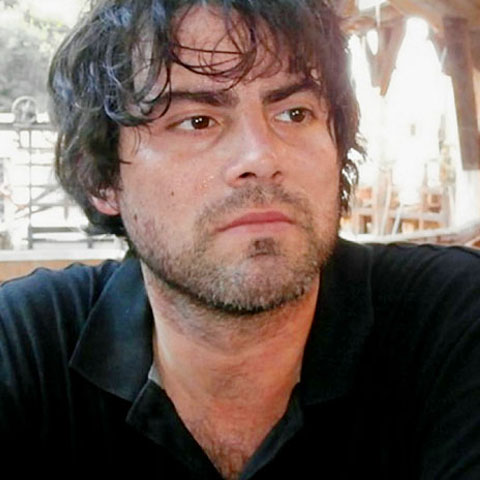
Mathieu Charbonneau completed his PhD in philosophy at the Université de Montréal (2013). His dissertation examined how the use of explanatory analogies between evolutionary biology and the social sciences informs the construction of a theory of cultural inheritance and structures its explanatory framework. His paper, “Populations without reproduction,” is soon to appear in Philosophy of Science. The current talk emanates from his post-doctoral work on “Cultural Development and Cultural Evolution” at the KLI.
