

KLI Colloquia are invited research talks of about an hour followed by 30 min discussion. The talks are held in English, open to the public, and offered in hybrid format.
Join via Zoom:
https://us02web.zoom.us/j/5881861923?omn=85945744831
Meeting ID: 588 186 1923
Fall-Winter 2026/27 KLI Colloquium Series
1 October 2026 (Thurs) 3-4:30 PM CET 
Scientific Integration as Fit: The Developmental Biases of Interdisciplinarity
Olesya BONDARENKO (KLI)
8 October 2026 (Thurs) 3-4:30 PM CET
The Role of Conversational Cues in the Co-Evolution of Language and Cooperation
Theresa MATZINGER (University of Vienna)
5 November 2026 (Thurs) 3-4:30 PM CET
Kin Matters: An Intervention in the Fragile Sciences
Robert A. WILSON (University of Western Australia)
19 November 2026 (Thurs) 3-4:30 PM CET
Modeling the Evolution of Human Early Embryogenesis with Stem Cells
Nicolas RIVRON (Institute of Molecular Biotechnology/IMBA, Vienna)
3 December 2026 (Thurs) 3-4:30 PM CET
Peter TURCHIN (Complexity Science Hub, Vienna)
10 December 2026 (Thurs) 3-4:30 PM CET
On the Cultural Macroevolution of Intentional Cranial Modifications
Marcelo SÁNCHEZ-VILLAGRA (University of Zurich)
14 January 2027 (Thurs) 3-4:30 PM CET
DNA from Archaeological Sediments as a Tracer for Past Societies
Benjamin VERNOT (University of Vienna)
28 January 2027 (Thurs) 3-4:30 PM CET
Beyond Fear: How the Amygdala Links Interoception and Exteroception
Ronald SLADKY (University of Vienna)
KLI Colloquia 2014 – 2026
Event Details
Topic description:
Life is a chemical reaction. Or, more precisely, life is a functionally closed and self-sustaining chemical reaction network. In other words, living systems produce their own components, in such a way as to maintain and regulate the chemical reaction network that produced them. During the 1970s, several researchers independently developed formal models of a minimal living system based on the above definition. However, most of these models do not explain how these systems could have emerged spontaneously from basic chemistry. They provide insights into the organization of life, but not necessarily its origin. Now, a new mathematical framework, based on the original notion of autocatalytic sets, is able to shed more light on both of these aspects. Autocatalytic sets capture the functionally closed and self-sustaining properties of life in a formal way, and detailed studies have shown how such sets emerge spontaneously, and can then evolve further, in simple models of chemical reaction networks. Furthermore, this new framework has been applied directly and successfully to real chemical and biological networks. Thus, the autocatalytic sets framework provides a useful and formal tool for studying and understanding both the origin and organization of life. In this talk, I will give a non-technical overview of the background, concepts, and main results of the formal framework, and how it can perhaps be generalized beyond chemistry and the origin of life to entire living systems, ecological networks, and possibly even social systems like the economy.
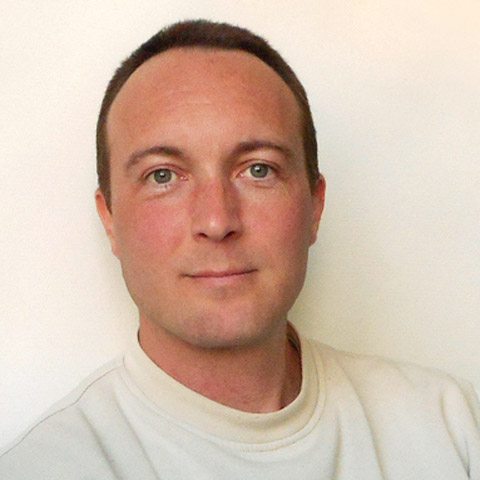
Biographical note:
Wim Hordijk is a computer scientist working in the areas of computational biology and bioinformatics. He was a graduate fellow at the Santa Fe Institute for several years, and during the next 10 years he worked on many short-term research and computing projects all over the world. He is currently based in Lausanne, Switzerland, as an independent researcher/consultant. Next to providing some computational support to other scientists, his own research has focused primarily on autocatalytic sets and the origin and organization of life.
