

KLI Colloquia are invited research talks of about an hour followed by 30 min discussion. The talks are held in English, open to the public, and offered in hybrid format.
Join via Zoom:
https://us02web.zoom.us/j/5881861923?omn=85945744831
Meeting ID: 588 186 1923
Fall-Winter 2026/27 KLI Colloquium Series
1 October 2026 (Thurs) 3-4:30 PM CET
Scientific Integration as Fit: The Developmental Biases of Interdisciplinarity
Olesya BONDARENKO (KLI)
8 October 2026 (Thurs) 3-4:30 PM CET
The Role of Conversational Cues in the Co-Evolution of Language and Cooperation
Theresa MATZINGER (University of Vienna)
5 November 2026 (Thurs) 3-4:30 PM CET
Kin Matters: An Intervention in the Fragile Sciences
Robert A. WILSON (University of Western Australia)
19 November 2026 (Thurs) 3-4:30 PM CET
Modeling the Evolution of Human Early Embryogenesis with Stem Cells
Nicolas RIVRON (Institute of Molecular Biotechnology/IMBA, Vienna)
3 December 2026 (Thurs) 3-4:30 PM CET
Peter TURCHIN (Complexity Science Hub, Vienna)
10 December 2026 (Thurs) 3-4:30 PM CET
On the Cultural Macroevolution of Intentional Cranial Modifications
Marcelo SÁNCHEZ-VILLAGRA (University of Zurich)
14 January 2027 (Thurs) 3-4:30 PM CET
DNA from Archaeological Sediments as a Tracer for Past Societies
Benjamin VERNOT (University of Vienna)
28 January 2027 (Thurs) 3-4:30 PM CET
Beyond Fear: How the Amygdala Links Interoception and Exteroception
Ronald SLADKY (University of Vienna)
KLI Colloquia 2014 – 2026
Event Details
Topic description:
During the lifetime of an organism, every individual encounters many combinations of diverse changes in the somatic genome, epigenome and microbiome. This gives rise to unimaginable number of novel combinations of internal perturbation which are unique to each individual. How any individual can tolerate this high load of new, individual-specific perturbations is not clear. We have recently propose a conceptual solution based on a new principle of adaptation (termed ‘Adaptive Improvisation’), which explains how random variation of any kind (and scale) can self-organize to confer a wide range of individual-specific adaptations beyond the existing outcomes of natural selection. This principle portrays gene regulation as an inseparable synergy between Darwinian selection and Lamarckian adaptation by improvisation. The division of workload between the two is regulated by stress which is viewed as a physical-like force that modifies the state of the organism until re-acquisition of relative homeostasis. I will present experimental work-in-progress which may support this idea and, if time permits, I will include a more general discussion.
Biographical note:
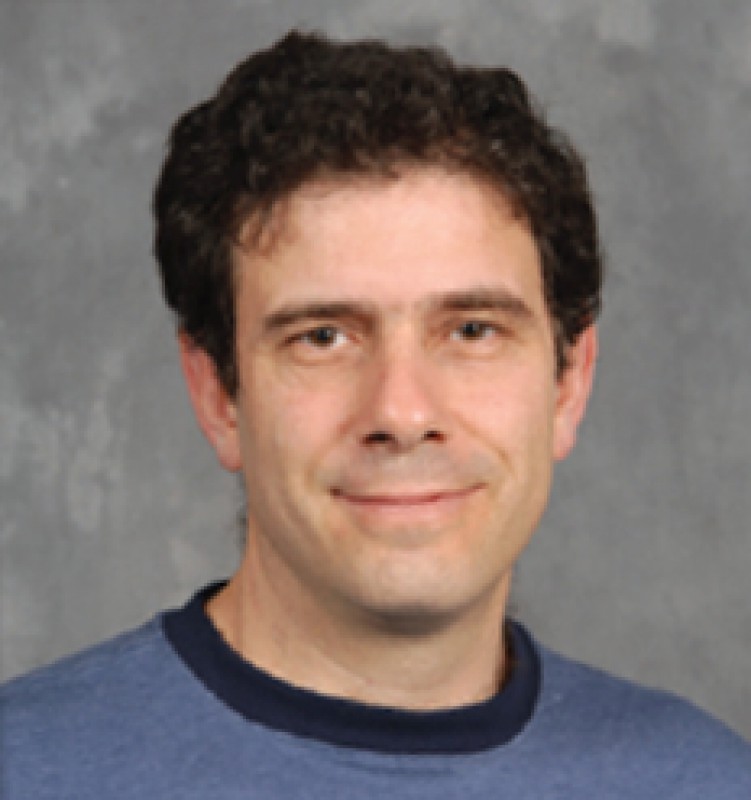
Yoav Soen is a biophysicist interested in how robust organisms can be sufficiently plastic to cope with new problems. Yoav was formally trained in Electrical Engineering and Physics (Technion, Israel Institute of Technology). After graduating, he got interested in Life Sciences and conducted a postdoctoral research with Patrick Brown at Stanford University, Dept. of Biochemistry (2001-2006). On 2006, Yoav established a research lab in the Weizmann Institute of Science, Department of Biological Chemistry. His group takes an experimental approach for studying how developing flies cope with unfamiliar scenarios of stress, the underlying epigenetic and symbiotic mechanisms of response, the trans-generational implications of these events and how they may bridge ecological and evolutionary processes.
