

KLI Colloquia are invited research talks of about an hour followed by 30 min discussion. The talks are held in English, open to the public, and offered in hybrid format.
Join via Zoom:
https://us02web.zoom.us/j/5881861923?omn=85945744831
Meeting ID: 588 186 1923
Fall-Winter 2026/27 KLI Colloquium Series
1 October 2026 (Thurs) 3-4:30 PM CET 
Scientific Integration as Fit: The Developmental Biases of Interdisciplinarity
Olesya BONDARENKO (KLI)
8 October 2026 (Thurs) 3-4:30 PM CET
The Role of Conversational Cues in the Co-Evolution of Language and Cooperation
Theresa MATZINGER (University of Vienna)
5 November 2026 (Thurs) 3-4:30 PM CET
Kin Matters: An Intervention in the Fragile Sciences
Robert A. WILSON (University of Western Australia)
19 November 2026 (Thurs) 3-4:30 PM CET
Modeling the Evolution of Human Early Embryogenesis with Stem Cells
Nicolas RIVRON (Institute of Molecular Biotechnology/IMBA, Vienna)
3 December 2026 (Thurs) 3-4:30 PM CET
Peter TURCHIN (Complexity Science Hub, Vienna)
10 December 2026 (Thurs) 3-4:30 PM CET
On the Cultural Macroevolution of Intentional Cranial Modifications
Marcelo SÁNCHEZ-VILLAGRA (University of Zurich)
14 January 2027 (Thurs) 3-4:30 PM CET
DNA from Archaeological Sediments as a Tracer for Past Societies
Benjamin VERNOT (University of Vienna)
28 January 2027 (Thurs) 3-4:30 PM CET
Beyond Fear: How the Amygdala Links Interoception and Exteroception
Ronald SLADKY (University of Vienna)
KLI Colloquia 2014 – 2026
Event Details
Topic description:
The perplexing diversity of the human personality is a yet unresolved puzzle in evolutionary science. Several hypotheses exist about its ultimate and proximate explanations without discussing the temporary aspects of its evolution. I propose the agricultural trigger hypothesis that explains how, when and why the current diversity evolved. Although pre-agricultural human bands already had to have some genotypic and phenotypic variation in personality traits, this was limited by their environment and social norms. Agriculture, however, altered several aspects of ancestral life, most importantly, it loosened the strict mutual control over the behavior of fellow group members. A positive feedback loop of social division of labor and individual niche specialization, fuelled continuously by the ever growing settlement sizes, economic inequality and hierarchy, thus triggered a major personality explosion. The current state of global diversity could therefore be the result of the above process, born with the Neolithic and still running. Supporting this hypothesis I present two agent based models capturing sub-problems of the above processes. The first explores how social division of labor can result in heritable behavioral differences, and the second shows how egalitarian norms can effect behavioral diversity.
Biographical note:
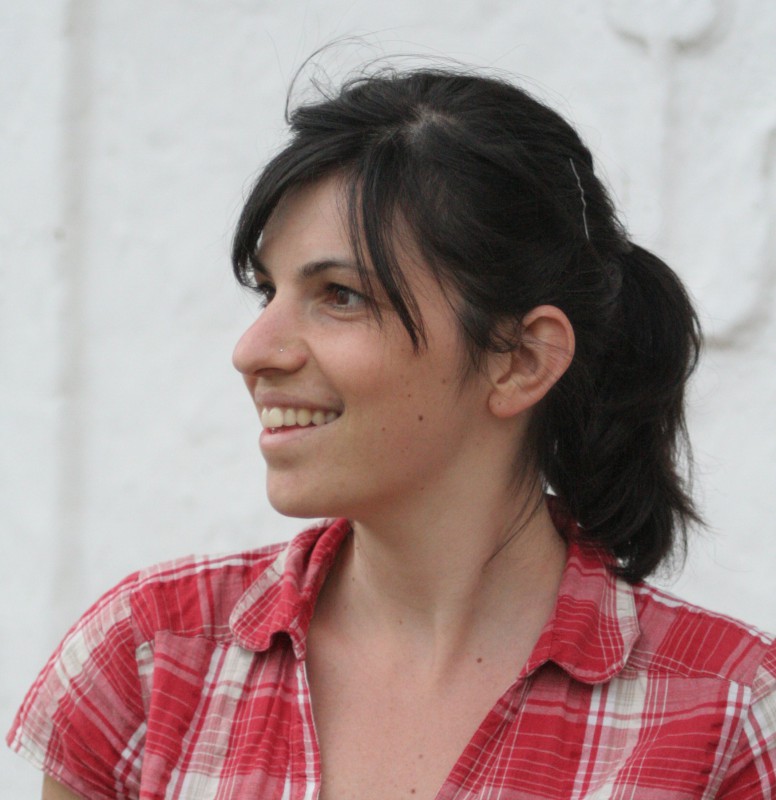
Zsóka Vásárhelyi holds a BSc and Master´s degree in Biology from the Eötvös Lóránd University, Budapest. She is doing her PhD thesis in the Theoretical Evolutionary Biology Doctoral Program of the Eötvös Lóránd University under the supervision of István Scheuring. Zsóka Vásárhelyi has been awarded a KLI Writing-Up Fellowship to complete her thesis.
