

KLI Colloquia are invited research talks of about an hour followed by 30 min discussion. The talks are held in English, open to the public, and offered in hybrid format.
Join via Zoom:
https://us02web.zoom.us/j/5881861923?omn=85945744831
Meeting ID: 588 186 1923
Fall-Winter 2026/27 KLI Colloquium Series
1 October 2026 (Thurs) 3-4:30 PM CET
Scientific Integration as Fit: The Developmental Biases of Interdisciplinarity
Olesya BONDARENKO (KLI)
8 October 2026 (Thurs) 3-4:30 PM CET
The Role of Conversational Cues in the Co-Evolution of Language and Cooperation
Theresa MATZINGER (University of Vienna)
5 November 2026 (Thurs) 3-4:30 PM CET
Kin Matters: An Intervention in the Fragile Sciences
Robert A. WILSON (University of Western Australia)
19 November 2026 (Thurs) 3-4:30 PM CET
Modeling the Evolution of Human Early Embryogenesis with Stem Cells
Nicolas RIVRON (Institute of Molecular Biotechnology/IMBA, Vienna)
3 December 2026 (Thurs) 3-4:30 PM CET
Peter TURCHIN (Complexity Science Hub, Vienna)
10 December 2026 (Thurs) 3-4:30 PM CET
On the Cultural Macroevolution of Intentional Cranial Modifications
Marcelo SÁNCHEZ-VILLAGRA (University of Zurich)
14 January 2027 (Thurs) 3-4:30 PM CET
DNA from Archaeological Sediments as a Tracer for Past Societies
Benjamin VERNOT (University of Vienna)
28 January 2027 (Thurs) 3-4:30 PM CET
Beyond Fear: How the Amygdala Links Interoception and Exteroception
Ronald SLADKY (University of Vienna)
KLI Colloquia 2014 – 2026
Event Details
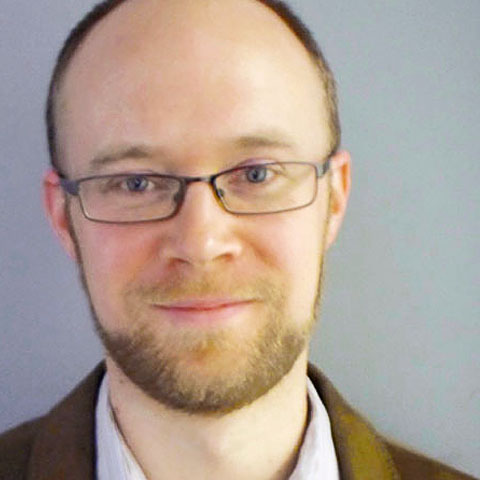
Topic description:
Despite its pervasiveness, the concept of ‘levels of organization’ has received little attention in its own right. In this presentation I will argue that, contrary to recent claims of its uselessness, the 'levels' concept can be revealed as a uniquely effective and flexible conceptual tool tailored to perform a wide host of scientific tasks. This approach posits a fragmentary concept that balances a striking variation in conceptual content between instances of usage with a remarkably conserved and sufficiently unifying significance attributed to it across these instances. Key to this 'fragmentary account' will be a reconstruction of 'levels’ that situates the concept within an interest-relative matrix of active usage within scientific practice. To this end I posit here two important components that comprise my fragmentary account: the term’s content fragments, which replace meaning and reference as carriers of the term's conceptual content, and the epistemic goal (sensu Brigandt 2010) motivating the term's usage, which delegates tasks whose execution fill these fragments in a given instance. Together, these show the concept of levels to be minimally but sufficiently coherent and unified. This heuristic, usage-based treatment of levels does not diminish the concept's general importance to science, but rather allows for its use in, and usefulness for, scientific practice to be better contextualized to particular tasks encompassing varying breadths of activity.
Biographical note:
Daniel holds Bachelor´s degrees in Philosophy and German Studies from the University of Cincinnati and a Master´s degree in Philosophy from Bielefeld University. In 2014 he completed his Ph.D. studies in Bielefeld under his dissertation project “The Concept of Levels of Organization in Biology”. Before his postdoctoral fellowship at the KLI, Daniel taught graduate and undergraduate seminars in current topics in the philosophy of science and epistemology at the University of Münster.
