

KLI Colloquia are invited research talks of about an hour followed by 30 min discussion. The talks are held in English, open to the public, and offered in hybrid format.
Join via Zoom:
https://us02web.zoom.us/j/5881861923?omn=85945744831
Meeting ID: 588 186 1923
Fall-Winter 2026/27 KLI Colloquium Series
1 October 2026 (Thurs) 3-4:30 PM CET
Scientific Integration as Fit: The Developmental Biases of Interdisciplinarity
Olesya BONDARENKO (KLI)
8 October 2026 (Thurs) 3-4:30 PM CET
The Role of Conversational Cues in the Co-Evolution of Language and Cooperation
Theresa MATZINGER (University of Vienna)
5 November 2026 (Thurs) 3-4:30 PM CET
Kin Matters: An Intervention in the Fragile Sciences
Robert A. WILSON (University of Western Australia)
19 November 2026 (Thurs) 3-4:30 PM CET
Modeling the Evolution of Human Early Embryogenesis with Stem Cells
Nicolas RIVRON (Institute of Molecular Biotechnology/IMBA, Vienna)
3 December 2026 (Thurs) 3-4:30 PM CET
Peter TURCHIN (Complexity Science Hub, Vienna)
10 December 2026 (Thurs) 3-4:30 PM CET
On the Cultural Macroevolution of Intentional Cranial Modifications
Marcelo SÁNCHEZ-VILLAGRA (University of Zurich)
14 January 2027 (Thurs) 3-4:30 PM CET
DNA from Archaeological Sediments as a Tracer for Past Societies
Benjamin VERNOT (University of Vienna)
28 January 2027 (Thurs) 3-4:30 PM CET
Beyond Fear: How the Amygdala Links Interoception and Exteroception
Ronald SLADKY (University of Vienna)
KLI Colloquia 2014 – 2026
Event Details
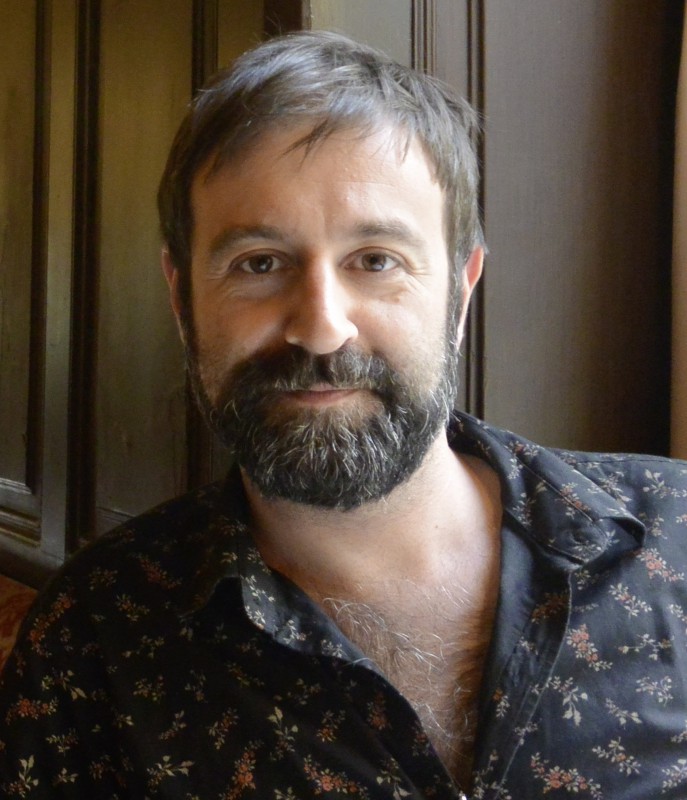
Topic description:
Inspired by Woodward’s account of causation and explanation and Sober’s conception of the theory of natural selection as a theory of forces, Caponi has recently defended that biology – and, especially, evolutionary biology – is grounded on a “mosaic of invariants”, that is, a net of causal regularities which, although not stable and universal enough to constitute genuine causal laws, may guarantee the explanatory autonomy of this discipline by supporting a number of relevant counterfactuals. In spite of lacking proper causal laws, evolutionary biology is a unitary theory because invariants are, in some sense, unified by other kinds of laws – the zero force laws, like the Hardy-Weinberg equilibrium, and the consequence laws, like the laws of population genetics –, which connect them within a more general theoretical framework. Might the explanatory structure of a hypothetical unified theory of cultural evolution be conceived in a similar way? The goal of my talk is to explore such possibility.
Biographical note:
Lorenzo is currently Assistant Professor of Epistemology at the Federal University of ABC (São Paulo, Brazil) and Researcher at the Institute of Advanced Studies of the University of São Paulo. He holds a Bachelor's degree in Philosophy from the University of Turin (2005) and PhD degree in Philosophy from the University Rovira i Virgili of Terragona (2010), obtained after having followed a postgraduate interdisciplinary programme in Cognitive Science and Language at the University of Barcelona. From 2011 to 2013 he was postdoctoral fellow at the University of São Paulo. His research interests are in Philosophy of Science, Philosophy of Biology and Cultural Evolution.
