

KLI Colloquia are invited research talks of about an hour followed by 30 min discussion. The talks are held in English, open to the public, and offered in hybrid format.
Join via Zoom:
https://us02web.zoom.us/j/5881861923?omn=85945744831
Meeting ID: 588 186 1923
Fall-Winter 2026/27 KLI Colloquium Series
1 October 2026 (Thurs) 3-4:30 PM CET
Scientific Integration as Fit: The Developmental Biases of Interdisciplinarity
Olesya BONDARENKO (KLI)
8 October 2026 (Thurs) 3-4:30 PM CET
The Role of Conversational Cues in the Co-Evolution of Language and Cooperation
Theresa MATZINGER (University of Vienna)
5 November 2026 (Thurs) 3-4:30 PM CET
Kin Matters: An Intervention in the Fragile Sciences
Robert A. WILSON (University of Western Australia)
19 November 2026 (Thurs) 3-4:30 PM CET
Modeling the Evolution of Human Early Embryogenesis with Stem Cells
Nicolas RIVRON (Institute of Molecular Biotechnology/IMBA, Vienna)
3 December 2026 (Thurs) 3-4:30 PM CET
Peter TURCHIN (Complexity Science Hub, Vienna)
10 December 2026 (Thurs) 3-4:30 PM CET
On the Cultural Macroevolution of Intentional Cranial Modifications
Marcelo SÁNCHEZ-VILLAGRA (University of Zurich)
14 January 2027 (Thurs) 3-4:30 PM CET
DNA from Archaeological Sediments as a Tracer for Past Societies
Benjamin VERNOT (University of Vienna)
28 January 2027 (Thurs) 3-4:30 PM CET
Beyond Fear: How the Amygdala Links Interoception and Exteroception
Ronald SLADKY (University of Vienna)
KLI Colloquia 2014 – 2026
Event Details
Topic description / abstract:
The species problem – a group of interrelated questions pertaining to the ontological status of species, definitions of the species category and delimitation of species taxa – is one of the most vexing and most passionately debated topics in biology. It has a historical, philosophical and biological dimension. After a short introduction highlighting, among other things, the homonymy of the term “species” and, very briefly, a historical misrepresentation of the history of notions about species, I will focus on the main cause underlying the species problem: nature’s fuzzy boundaries and the mismatch between a discrete ordering system (taxonomy) and a continuous process (evolution). Most importantly, I will give a short overview of the practical ramifications of the species problem. While species taxa are philosophical individuals with extramental reality, there is a fair chance that the species category might be an artefact just like the higher Linnean categories. Nonetheless, it is widely used as a kind of basic currency in many different disciplines, from evolutionary biology and macroecology to conservation biology and environmental policy. This distorts many purportedly quantitative analyses and poses a serious challenge that needs to be addressed if biology is to be a rigorously scientific discipline.
Biographical note:
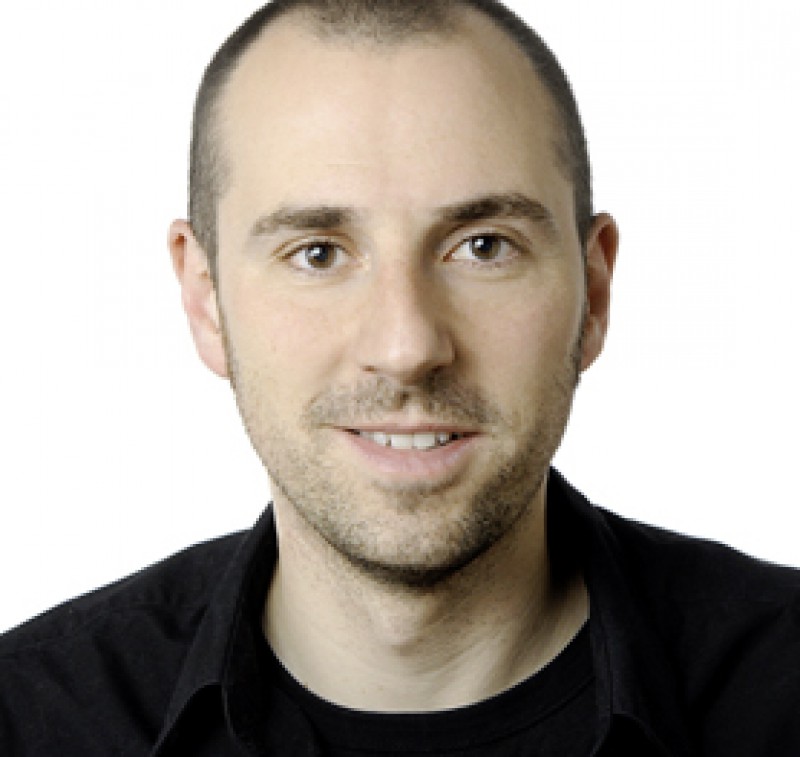
Born in Kiel, Germany, in 1974 to a German mother and a Greek father. I studied biology, history of science and philosophy in Kiel and Jena and graduated with a degree in biology (“Diplom”) from the Friedrich-Schiller-Universität in Jena. I got a PhD in zoology in 2005 and my habilitation for zoology and evolutionary biology in 2009 from the Christian-Albrechts-Universität in Kiel. Since 2011 I have been head of the Mammal Collection at the Natural History Museum in Vienna. My main research interests are intraspecific diversity, phylogeography and population/conservation genetics in mammals, particularly deer, and birds as well as the history and theory of evolutionary biology, systematics and taxonomy, with a special focus on species concepts and the species problem.
