

KLI Colloquia are invited research talks of about an hour followed by 30 min discussion. The talks are held in English, open to the public, and offered in hybrid format.
Join via Zoom:
https://us02web.zoom.us/j/5881861923?omn=85945744831
Meeting ID: 588 186 1923
Fall-Winter 2026/27 KLI Colloquium Series
1 October 2026 (Thurs) 3-4:30 PM CET
Scientific Integration as Fit: The Developmental Biases of Interdisciplinarity
Olesya BONDARENKO (KLI)
8 October 2026 (Thurs) 3-4:30 PM CET
The Role of Conversational Cues in the Co-Evolution of Language and Cooperation
Theresa MATZINGER (University of Vienna)
5 November 2026 (Thurs) 3-4:30 PM CET
Kin Matters: An Intervention in the Fragile Sciences
Robert A. WILSON (University of Western Australia)
19 November 2026 (Thurs) 3-4:30 PM CET
Modeling the Evolution of Human Early Embryogenesis with Stem Cells
Nicolas RIVRON (Institute of Molecular Biotechnology/IMBA, Vienna)
3 December 2026 (Thurs) 3-4:30 PM CET
Peter TURCHIN (Complexity Science Hub, Vienna)
10 December 2026 (Thurs) 3-4:30 PM CET
On the Cultural Macroevolution of Intentional Cranial Modifications
Marcelo SÁNCHEZ-VILLAGRA (University of Zurich)
14 January 2027 (Thurs) 3-4:30 PM CET
DNA from Archaeological Sediments as a Tracer for Past Societies
Benjamin VERNOT (University of Vienna)
28 January 2027 (Thurs) 3-4:30 PM CET
Beyond Fear: How the Amygdala Links Interoception and Exteroception
Ronald SLADKY (University of Vienna)
KLI Colloquia 2014 – 2026
Event Details
Project description / abstract:
From a socio-ecological perspective, forests are more than ecosystems dominated by woody plants: They are managed and used by people, providing timber, fuelwood and other resources, and their area extent is often constrained by land demand for other purposes, most notably agriculture. Viewing forests from such a multi-dimensional perspective sheds light on the biophysical preconditions and consequences of forest change related to land and resource use, and on potential problem shifts associated to forest change.
In the research project HEFT, we study forest transitions, i.e. long-term and large-scale shifts from net deforestation to reforestation in different geographical and historical periods, and how they are linked to changes in land and energy use. The ultimate aim in the project is to identify and quantify processes that enable reforestation but cause additional emissions („hidden emissions“) outside the forest sector, e.g. through agricultural intensification, land displacement or woodfuel substitution.
In my presentation I will provide insights from ongoing collaborative work in the project, investigating forest transitions in Europe, North America and Southeast Asia in both case-specific and comparative ways. Our work aims at better quantifying and understanding forest transitions trajectories, contextualizing forest transitions by changes in land and energy use, and addressing issues of access and justice emerging in the context of forest protection.
Biographical note:
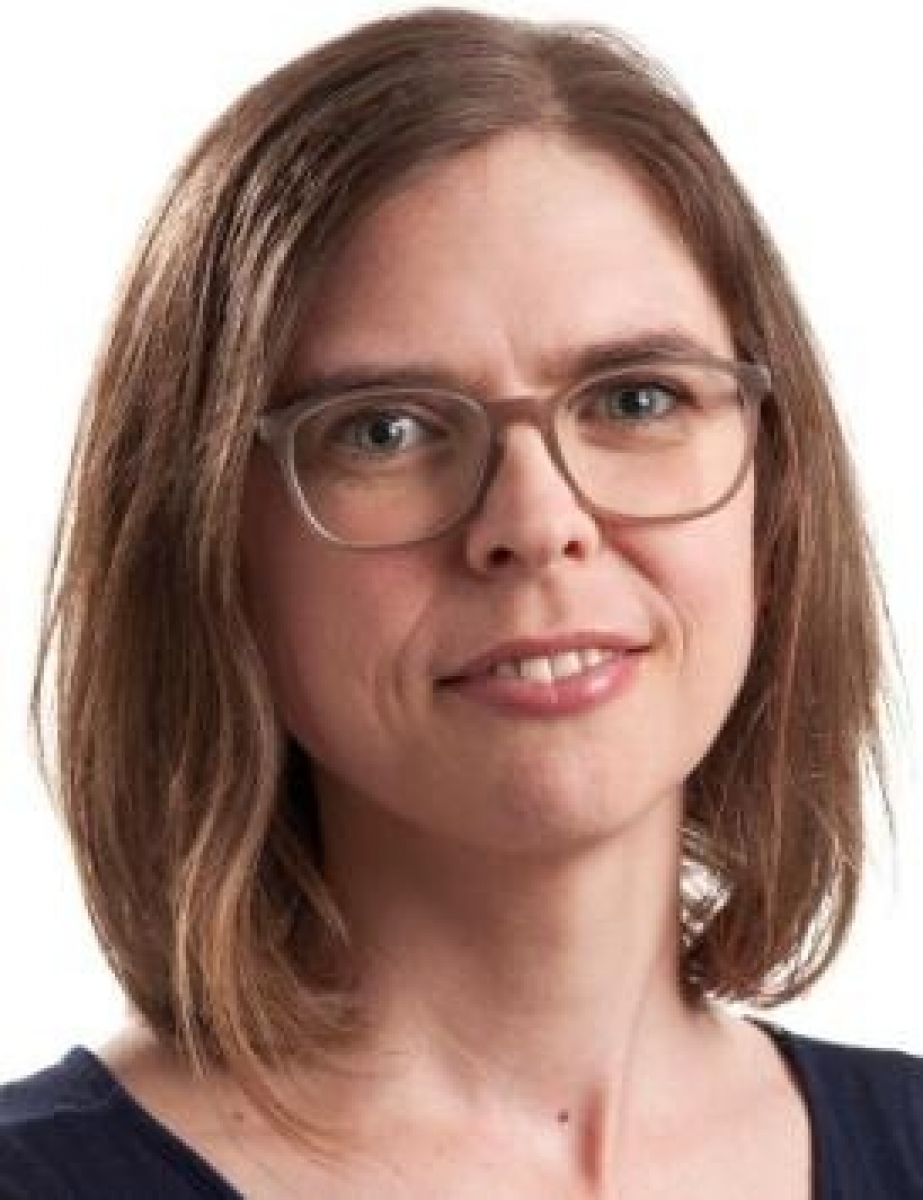
Simone Gingrich is senior researcher at the Institute of Social Ecology, University of Natural Resources and Life Sciences Vienna (BOKU). She holds a Master degree in ecology (University of Vienna), a PhD in social ecology (Universitaet Klagenfurt), and a habilitation in social ecology (University of Natural Resources and Life Sciences Vienna). Her research addresses the change of sustainability challenges in the course of industrialization, focusing on the interface of land and energy use. She works in interdisciplinary ways, adapting methods from environmental accounting to historical time periods, and linking quantitative assessments of biophysical processes to qualitative analyses of societal change. In 2017 she was awarded with an ERC starting grant („HEFT“, ERC StG 757995), and in 2018 she was elected as a member of the Austrian Academy of Sciences‘ Young Academy.
http://heft.boku.ac.at
https://boku.ac.at/en/wiso/sec/staff/gingrich-simone
twitter: @simonegingrich
