

KLI Colloquia are invited research talks of about an hour followed by 30 min discussion. The talks are held in English, open to the public, and offered in hybrid format.
Join via Zoom:
https://us02web.zoom.us/j/5881861923?omn=85945744831
Meeting ID: 588 186 1923
Fall-Winter 2026/27 KLI Colloquium Series
1 October 2026 (Thurs) 3-4:30 PM CET
Scientific Integration as Fit: The Developmental Biases of Interdisciplinarity
Olesya BONDARENKO (KLI)
8 October 2026 (Thurs) 3-4:30 PM CET
The Role of Conversational Cues in the Co-Evolution of Language and Cooperation
Theresa MATZINGER (University of Vienna)
5 November 2026 (Thurs) 3-4:30 PM CET
Kin Matters: An Intervention in the Fragile Sciences
Robert A. WILSON (University of Western Australia)
19 November 2026 (Thurs) 3-4:30 PM CET
Modeling the Evolution of Human Early Embryogenesis with Stem Cells
Nicolas RIVRON (Institute of Molecular Biotechnology/IMBA, Vienna)
3 December 2026 (Thurs) 3-4:30 PM CET
Peter TURCHIN (Complexity Science Hub, Vienna)
10 December 2026 (Thurs) 3-4:30 PM CET
On the Cultural Macroevolution of Intentional Cranial Modifications
Marcelo SÁNCHEZ-VILLAGRA (University of Zurich)
14 January 2027 (Thurs) 3-4:30 PM CET
DNA from Archaeological Sediments as a Tracer for Past Societies
Benjamin VERNOT (University of Vienna)
28 January 2027 (Thurs) 3-4:30 PM CET
Beyond Fear: How the Amygdala Links Interoception and Exteroception
Ronald SLADKY (University of Vienna)
KLI Colloquia 2014 – 2026
Event Details
Join Zoom Meeting
https://us02web.zoom.us/j/5881861923?omn=85945744831
Meeting ID: 588 186 1923
Topic description / abstract:
What enables us to assess and respond to transitory circumstances in a timely, energy efficient, and context-relevant manner? One way locomotive organisms including humans achieve such behaviour relies on embodied cognitive mechanisms tied to neural organisation and bodily morphology. In this talk, I outline an evolutionary account of how these contextual mechanisms could emerge through selection pressures, focussing on predation risk. The mechanisms would be plausibly conserved but, as I show, they are susceptible to functional impairment with ordinary use under extraordinary conditions. Such impairment could manifest in ways consistent with a typically identified dysregulation associated with the construct of fear, commonly considered to have an evolutionary basis. The apparent consistency between the general impairment and the specific dysregulation is significant for understanding the role of evolutionarily conserved mechanisms in some psychiatric conditions. Understanding this role is important for the design and interpretation of model organism studies in translational research. While the account partly resonates with recent analyses in evolutionary psychiatry on organism-environment mismatch and defensive dysregulation, it identifies a distinct cause of vulnerability.
Biographical note:
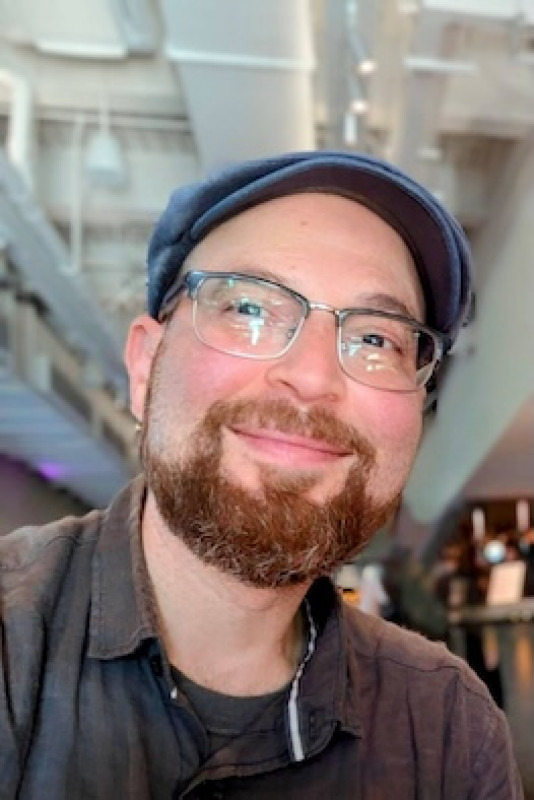
Adam Linson is a Lecturer (Assistant Professor) in Computing & Communications at the Open University (UK). He is also Co-Director of the Innogen Institute (connecting life science innovation and policymaking), based jointly at the Open University and the University of Edinburgh. He develops neurobehavioural models of how perceptual uncertainty is resolved under stress and time pressure, in relation to impaired or enhanced cognitive flexibility. His research focus is Post-traumatic Stress Disorder (PTSD), which he studies using multiple methods that connect theoretical neurobiology, psychiatry, evolutionary ecology, and the history and philosophy of science. His work also links to other fields including cognitive science and music psychology. He was previously an Anniversary Fellow in Computing and Philosophy at the University of Stirling, a Postdoctoral Fellow at the University of Edinburgh, and a Visiting Fellow at the University of Oxford, the UCL Wellcome Centre for Human Neuroimaging, and the Konrad Lorenz Institute for Evolution and Cognition Research (KLI, Austria).
